Method Massage Training About Book Massage Book PT Lesson
The method

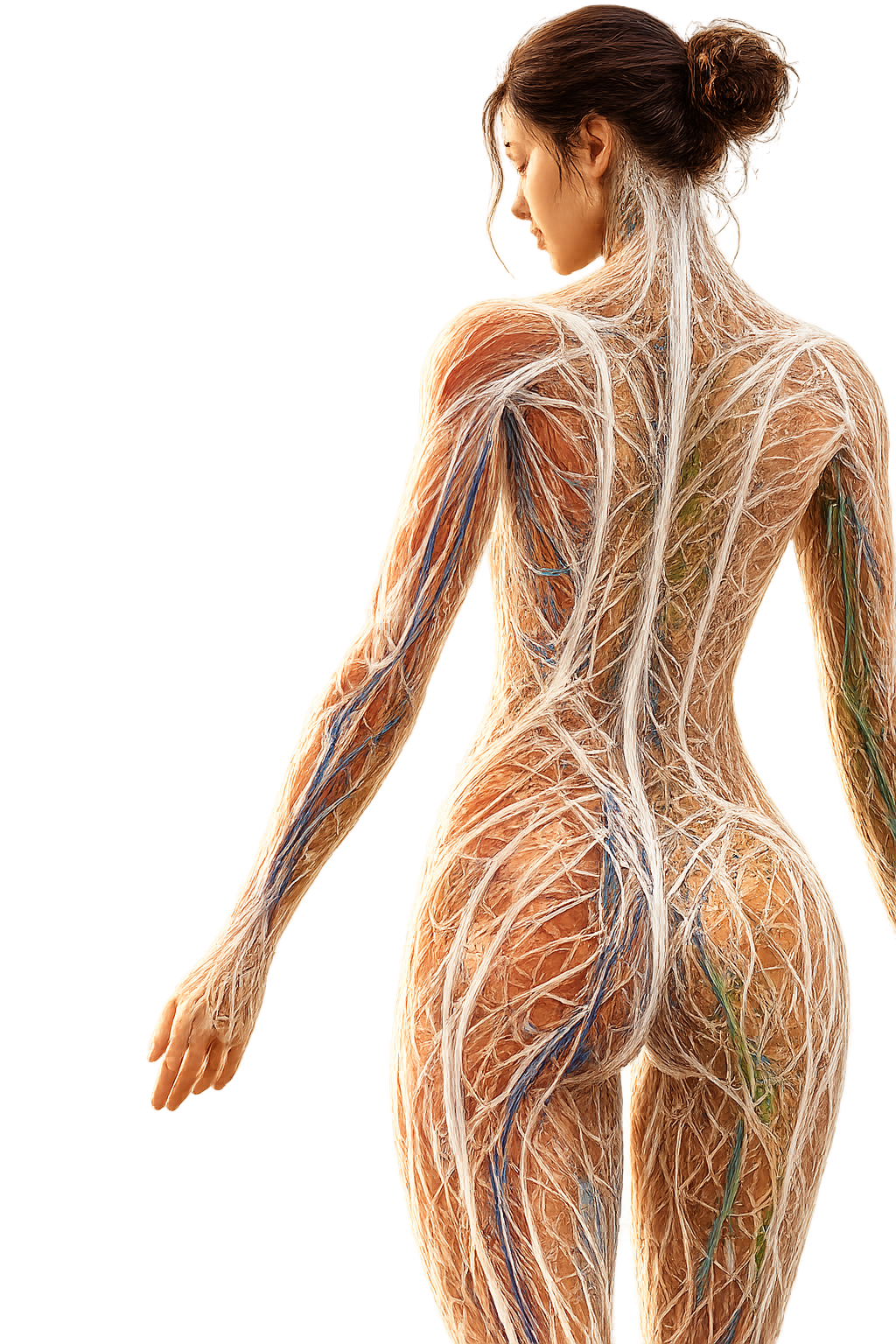
It is all fascia.

Fascia is the tissue around every muscle, organ, and nerve in your body. Think cling wrap, layered over everything. When one part of it tightens, everything attached to it tightens too. Most therapists work on the muscle and miss the fascia. That is why the tension keeps coming back.

Why fascia matters

Four symptoms. One source.

Neck + Upper Back

Pain that returns within days.

What it looks like. Tightness across the trapezius, restricted neck rotation, headaches that build through the day.

Why it returns. The fascia of the upper back is one continuous sheet. Working only the muscle leaves the underlying sheet contracted. The muscle re-tightens to match.

What Marina does. Releases the thoracolumbar and cervical fascia together. The system relaxes as one piece.
Jaw + TMJ

Tension that follows you to sleep.

What it looks like. Jaw clenching, tension headaches, disturbed sleep, sore on waking.

Why it returns. The jaw is held by fascia inside the mouth and along the throat. External massage cannot reach it.

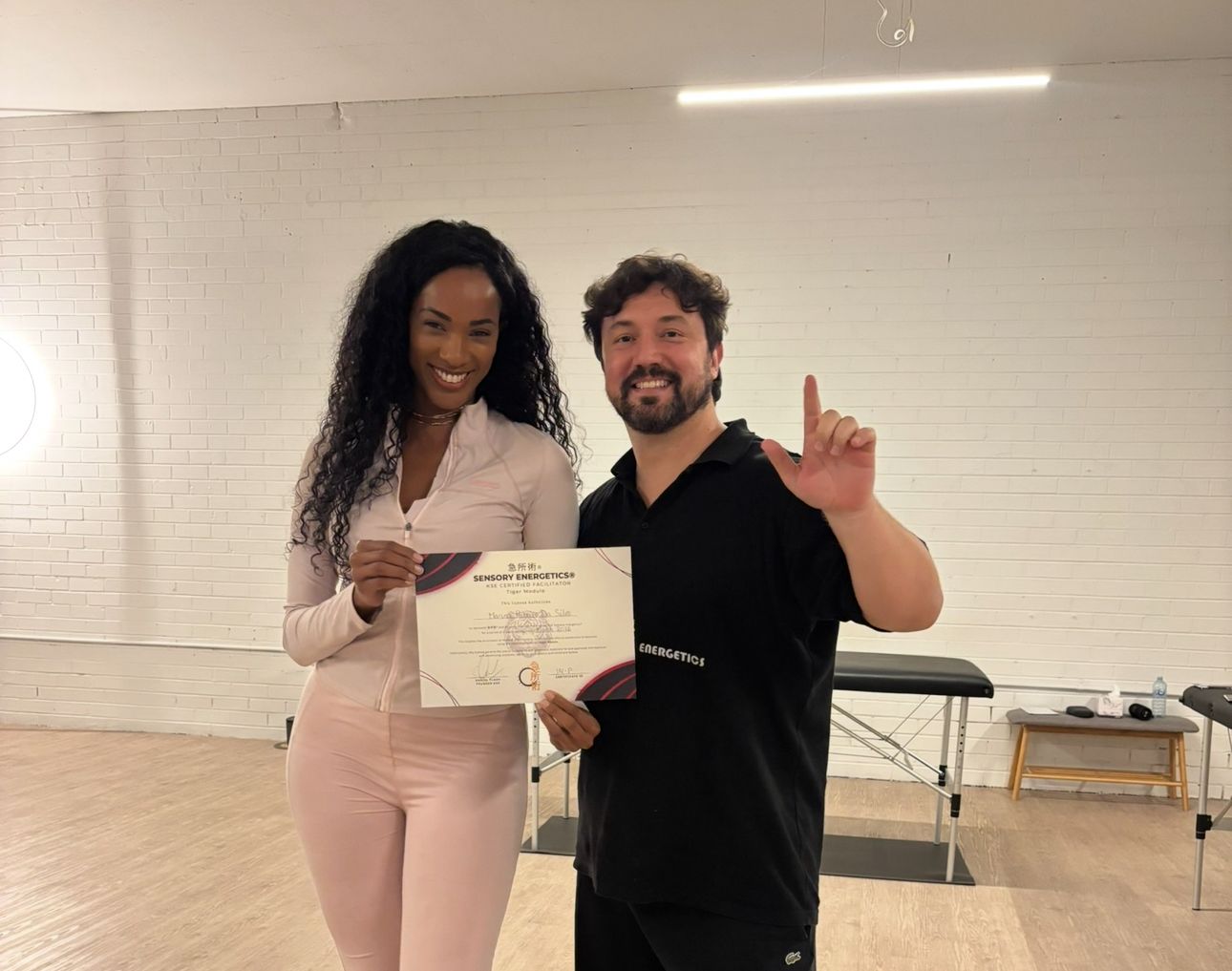
What Marina does. Trained in TMJ Mastery and buccal (intraoral) work. She reaches the fascia from the inside, where the pattern is actually stored.

Movement Restriction

A range that quietly shrinks.

What it looks like. Reaching overhead is harder. Squats feel shallow. The body is stiff in the morning and improves only after warm-up.

Why it returns. Fascial adhesions limit how much length the muscle can produce. Stretching alone does not break adhesions.

What Marina does. Myofascial release in the bodywork session. Then trains the cleared range in PT so the body keeps it.

Training Plateau

Numbers that will not move.

What it looks like. Squat, deadlift, or press stuck at the same load for months. Programming changes have stopped helping.

Why it returns. The body adapts around a restriction by compensating. You train the compensation, not the missing range.

What Marina does. Identifies the fascial chain holding the compensation. Releases it. Trains the new range under load.

The modalities

Four tools. One body. Chosen for what your tissue needs that day.

Somatic Massage

60 min · A$125

Marina-developed methodology combining myofascial release, Brazilian lymphatic drainage, breathwork, and deep-relaxation work. Solves: chronic muscular tension, fluid retention, fascial rigidity, accumulated physical stress.

KSE Sensory Energetics

90 min · A$305 · Signature

Integrative method that activates the central nervous system through ancient techniques, breath, and somatic stimuli. Solves: nervous-system dysregulation, tension stored by the body for months or years, anxiety patterns held in tissue.

Conscious Movement

In every session

Breathwork, somatic awareness, and mobility work woven through every bodywork and training session. Solves: the gap between feeling looser on the table and moving differently afterward.

Personal Training

60 min · From A$75/session on plan

Specialist 1-on-1 training at Snap Fitness Maroubra, built around what your bodywork sessions reveal. Solves: training plateaus, mobility limits, perimenopause and menopause strength needs, body awareness.

The combination

Two halves of one practice.

Most therapists pick one. Massage therapists release tension and send you home. Trainers build strength and assume the tissue will sort itself out.

Marina trained in both because they are the same work. Bodywork removes the restriction. Training builds strength in the range the release just opened. Without the bodywork, training calcifies compensation. Without the training, bodywork releases a body that then re-tightens around its old habits.

Most clients start with massage. After two or three sessions, when they feel what the body can actually do, they add training. The two compound. The work holds.

The research

Why the body holds what it holds.

8 / 10
Australian adults will experience chronic neck or back tension this year.
Australian Institute of Health and Welfare
15%
of adults experience TMJ disorders. Most never receive direct treatment.
National Institute of Dental and Craniofacial Research
85%
of chronic musculoskeletal pain involves myofascial trigger points.
Journal of Bodywork and Movement Therapies
1 / 3
of Australians report stress symptoms held physically in the body.
Australian Psychological Society

Ready to feel the difference?

Start with one session. After the first hour you will know whether this is the right work.

Book Massage Book PT Lesson